If you have pressed the accelerator from a full stop, felt the car shift gears fast, or driven hard on a back road or track day, you know the clutch makes a big change. Smart clutch tuning can change how your car feels, how it reacts, and how long your drivetrain lasts. It works for any driver who seeks a sharper feel, smoother shifts, and a more exact delivery of power.
Below you will see the key ideas, setup tips, and care habits that help you get a better clutch without losing everyday drive.
What is clutch tuning—and why it matters
Clutch tuning means changing how your clutch engages and sends power. It means to adjust:
- Your choice of parts (disc, pressure plate, flywheel)
- The feel of the pedal and its exact catch point
- The behavior of the hydraulic or cable system
- How heat is managed and how long the parts last
It is not just about choosing the hardest parts. It is about balancing three things:
- Torque capacity – Can the clutch hold the engine force?
- Drivability – Is the operation smooth and easy to control?
- Reliability – Will the clutch last under heavy use?
When these work well together, your car starts faster, shifts smoother, and feels more in tune with your foot.
Understanding how your clutch works
Before you change your clutch, you need to see what happens under the pedal.
A normal clutch system has these parts:
- Flywheel – It attaches to the crankshaft and gives weight that helps the friction.
- Clutch disc – It has friction material pressed between the flywheel and pressure plate.
- Pressure plate – It uses springs to press the disc to the flywheel.
- Release mechanism – The throwout bearing and fork let the disc separate.
- Actuation system – A cable or hydraulic setup that links to the pedal.
When you press the clutch pedal, you lift the pressure from the disc. This lets the engine and transmission spin on their own. When you lift your foot, the clutch locks the parts together. Clutch tuning works with the speed and tightness of that action.
Choose the right clutch parts for your use
A key clutch tuning choice is to pick parts that suit your own way of driving.
1. Clutch disc material
There are differences in friction material:
-
Organic
- Works smooth and is easy to drive
- Good for standard or mildly tuned cars
- May wear if you use too many hard launches
-
Kevlar/performance organic
- Handles heat well and lasts longer
- Feels a bit more abrupt than organic
- Serves both street and track use
-
Ceramic/ceramic-metallic (puck clutches)
- Holds high torque and heat
- Feels more on/off and is hard to control in traffic
- Best for track or drag use
-
Sintered iron/multi-puck race discs
- Withstands very high torque and heat
- Feels very harsh for everyday use
- Meant for race cars only
The secret is not to overdo it for pride. A well-matched organic or Kevlar clutch, tuned to suit its purpose, often works better and lasts longer on a daily car than a very harsh ceramic disc.
2. Pressure plate clamping force
Stronger does not mean better. A very stiff plate can:
- Raise pedal effort
- Strain the crankshaft bearing
- Hinder smooth engagement
- Tire you in daily driving
You want just enough force to meet your engine torque. Many makers show torque ratings. Pick a plate that can handle your engine torque plus about 20–30% extra.
3. Flywheel weight
The flywheel is a hidden tuning tool:
-
Heavier flywheel
- Engages more slowly
- Helps avoid stalling
- Causes a slow rise and fall in engine speed
-
Lighter flywheel
- Lets the engine rev up and drop quickly
- Feels more lively
- Can stall the car if used too hard
For daily driving, a flywheel with a moderate weight is often the best choice. It makes the car feel responsive without making starts a hassle.
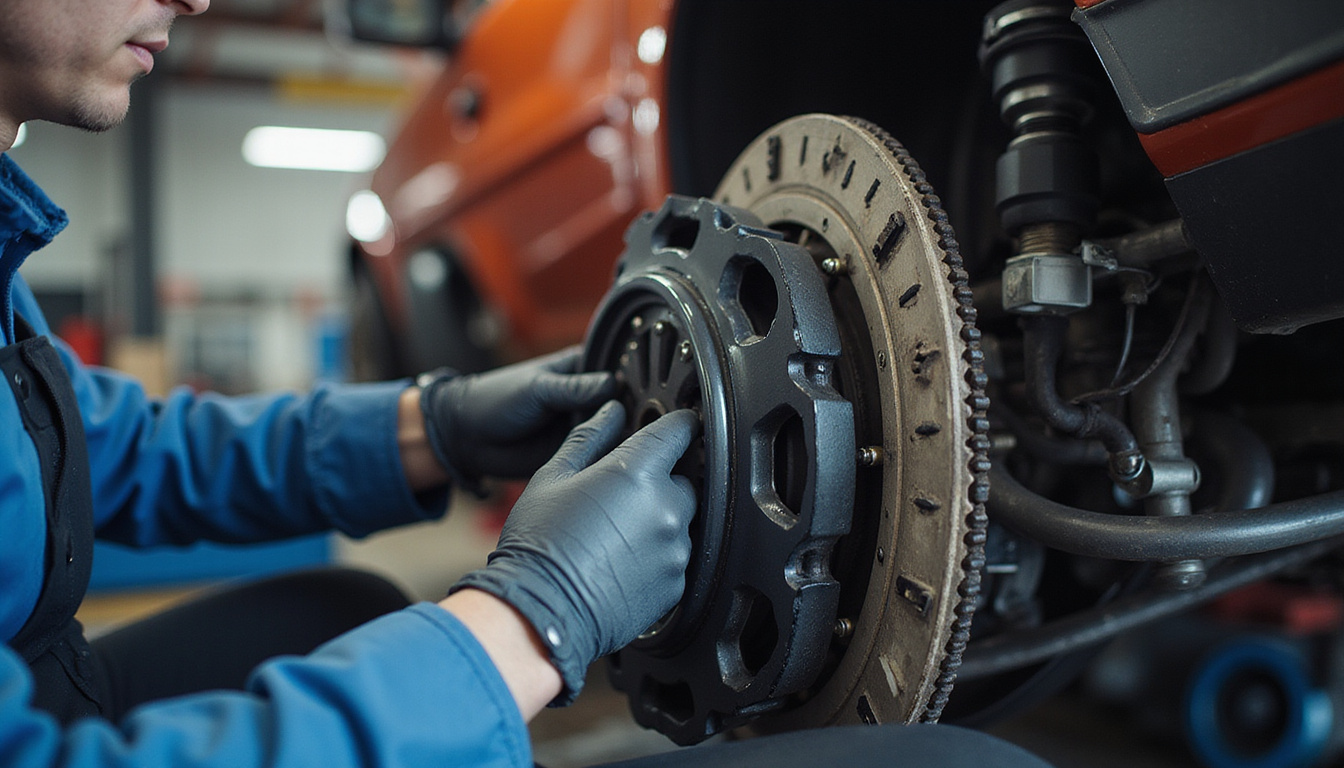
Pedal feel and engagement: the art of drivability
The pedal ties performance to comfort. A properly tuned clutch makes the pedal feel right.
Set the right engagement point
If the engagement point is too high or too low, the car can feel off even with good parts.
-
Too high:
- The clutch may catch too early
- It may be hard to modulate in performance driving
- It may come from poor adjustment or worn parts
-
Too low:
- The clutch grabs near the floor
- It may not fully separate (causing hard shifts or sound)
- It can cause extra wear if you hold down the pedal
How you adjust depends on your clutch system:
- Cable clutches: Set the cable length and free play right at the fork or pedal.
- Hydraulic clutches: Bleed the system; some cars let you adjust the pushrod or pedal stop.
A middle or upper catch point that feels even and requires little extra travel is best.
Free play and pedal stops
A bit of free play means that the pedal moves a little before it feels resistance. This free play:
- Stops the throwout bearing from rubbing all the time
- Reduces early wear of parts
- Makes sure the clutch holds fully when the pedal is at rest
Many makers suggest a little free play. When you tune the clutch, check this and make adjustments. In performance driving, a pedal stop may cut travel and help make shifts fast and firm.
Hydraulic vs cable systems: tuning the trigger
How the clutch is triggered changes its feel.
Hydraulic clutch tuning tips
Hydraulic systems are now common and feel smooth. They can still get some care:
- Bleed the system so that no air stays inside. Air makes the pedal feel spongy.
- Check both the master and slave cylinder. Worn seals may impede a precise feel.
- Try braided lines. They resist expansion under pressure and give a firmer feel.
Cable clutch tuning tips
Cable systems are simple and can be tuned by hand:
- Set the right cable tension. Too tight means the clutch does not fully disengage; too loose means you may get hard shifts.
- Check the cable path. A bend or a kink can cause a rough feel.
- Lubricate or change stretched cables. Fresh cables can drop the work needed on the pedal and smooth the feel.
Heat management: the hidden key to clutch work
A part of clutch tuning is to stop too much heat from building up. Excess heat can burn the friction, warp the flywheel, and cause slip.
Driving ways to cut heat
- Use clean launches that do not slip too long.
- Keep your foot off the clutch pedal after engagement.
- Do not use the clutch to hold the car on a hill. Use the brake.
- Stop hard driving for a while to let the clutch cool down.
Hardware choices that help with heat
- Friction material that stands more heat
- Flywheels that have vents or slots to let heat escape
- Twin-disc clutches in high-power builds to share the load and heat
For most street use, pick a kit that fits your drive and use habits that keep heat low.
Common clutch tuning mistakes to avoid
Drivers can make repeat errors when they try to gain more power. Avoid these pitfalls:
-
Too much aggression for a street car
A full ceramic plate in a daily car may lead to fast wear and rough driving. -
Failing to check all parts
Changing only the disc while not checking the pressure plate, flywheel, or bearings may cause issues. -
Skipping a careful break-in
Most new clutches need 300–500 miles of gentle use. Hard launches too soon can glaze the disc. -
Misreading the issues
Some problems may be due to worn engine or transmission mounts or gearbox parts, not the clutch. -
Following torque ratings without care
Different makers test in different ways. Ask questions and allow a safe extra margin.
Practical clutch tuning tips for different drivers
Different drivers need different setups. Here is a quick guide:
-
Daily commuter, stock or near-stock power
- A quality standard or mild performance organic clutch
- A stock or a slightly lighter flywheel
- Smooth operation and low pedal effort are key
-
Fun street driving with occasional track days
- A performance organic or Kevlar disc
- A modest rise in clamping force
- A somewhat lighter flywheel
- A stainless line and fresh fluid add to the feel
-
High-power street or track build
- A ceramic/metallic or twin-disc setup
- A firmer pressure plate that still feels good
- A reduced flywheel weight based on engine needs
- Close attention to cooling and a good break-in make a difference
-
Drag or race car
- A multi-puck ceramic or sintered iron disc
- A high clamping pressure plate
- A very light flywheel where rules let you change it
- Frequent checks and timely replacement are a must
Basic clutch tuning checklist
Use this list to see how your clutch works:
- [ ] Clutch disc and pressure plate match the engine power
- [ ] Flywheel surface is clean, flat, and well maintained
- [ ] Pedal free play and engagement height are set correctly
- [ ] Hydraulic system is bled well or cable tension is right
- [ ] Related parts like the pilot bearing, release bearing, and dowels are new
- [ ] A soft break-in is done before hard use
- [ ] There are no leaks in the master or slave cylinder
- [ ] Driving style helps to avoid unneeded slip
FAQ: Common questions about clutch tuning
-
How does tuning improve acceleration and shifting?
A tuned clutch grips fully under load without slip and still lets go completely for fast shifts. This helps more engine power reach the wheels. Launches feel fast and gear changes come quick and smooth. -
What is the best clutch setup for performance street driving?
For most performance street cars, a quality performance organic or Kevlar clutch with a mild upgrade in the pressure plate works best. Use a slightly lighter flywheel, ensure the hydraulic or cable system is well set, and allow a good break-in. This setup keeps the car easy to drive while giving a sharp feel. -
Do I need a racing clutch for a tuned engine?
Not always. Many tuned engines, especially turbo models, work well with a high-quality street clutch that is rated a bit above the engine output. Racing clutches are made for special cases and may not be friendly for daily use. Pick the least harsh clutch that meets your engine’s force (source: SAE Technical Papers – Clutch system design fundamentals).
Take control of your car’s performance with smarter clutch tuning
Upgrades in power and tire grip do not help if the clutch does not transfer power well. With smart clutch tuning—picking the right friction parts, setting the pedal feel, caring for your hydraulic or cable system, and keeping heat low—you get a car that feels better in every start and shift.
If your setup slips, makes chatter sounds, or feels vague, it is time to plan a well-tuned clutch. Speak with a trusted tuner or local shop. Tell them your power goals and driving habits. Choose parts that fit what you need. A tuned clutch gives you a sharper feel, stronger starts, and a car that feels connected and ready to go.
