Flag Signals You Can’t Ignore on Busy Beaches
When you go to the beach, you pack sunscreen, snacks, and a spot on the sand. Look for the flag signals. They serve as a quick way for lifeguards to share how the sea and air may change.
When the waves shift fast, tides, currents, wind, and sea life can add risk in minutes. Lifeguards show flag signals. The flags use clear colors to warn you of danger. On busy beaches, people often:
• Arrive in a hurry
• Miss the posted signs
• Downplay the strength of the ocean
These lights cut through the noise. They work as a short code that lets you see the risk at a glance.
Data from the U.S. Lifesaving Association finds that lifeguards attend many incidents each year. Strong surf or rip currents play a big role in drownings. Heed the flag signals to cut down your own risk.
The Standard Color System: What Each Beach Flag Means
Many coastal areas use a set of color signals. Check the beach board for exact rules. Here is the usual code.
Red Flag: High Hazard – Strong Surf and/or Currents
A red flag tells you to be extra careful. It means that the surf or currents are strong. The water is unsafe for most swimmers.
• Do not swim if you are not a strong swimmer.
• If you go in, stay near the shore and within sight of a lifeguard.
• Watch your children closely in shallow water.
On busy days, red flags may come out as tides rise or winds change.
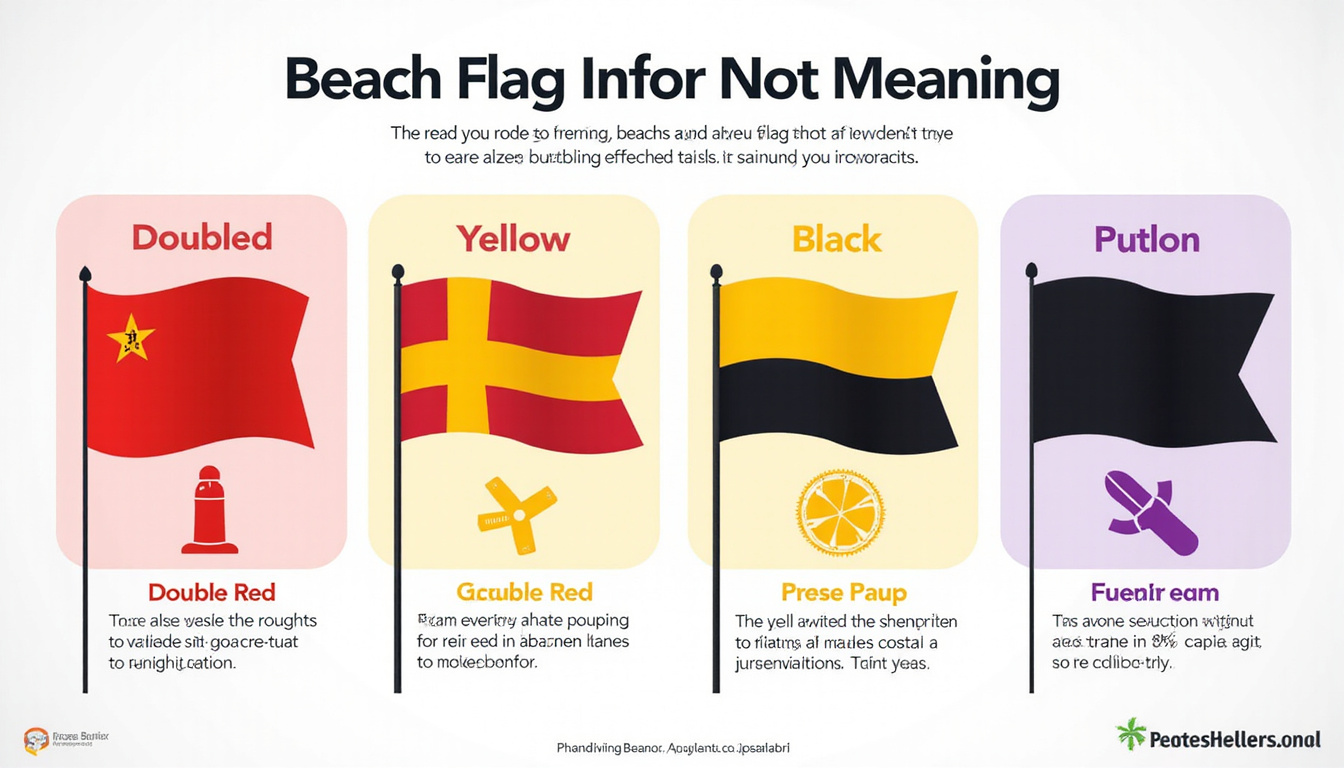
Double Red Flags: Water Closed to the Public
Double red flags mean the water is off limits. The sea may be rough because of high surf, storms, or pollution.
• Do not enter the water.
• Keep children away from the edge.
• Even standing by the water can be risky if waves are strong.
Yellow Flag: Medium Hazard – Moderate Surf and/or Currents
A yellow flag sends a simple warning. It means the water has moderate waves or currents. This condition is more risky for new swimmers and children.
• Stay in water that is waist-deep or less.
• Use approved flotation gear instead of pool toys.
• Swim only near the lifeguard stations.
• Do not swim far from the shore.
On busy beaches where many people are present, yellow flags show that caution is needed.
Green Flag: Low Hazard – Calm Conditions, But Not No Risk
A green flag shows that conditions are calm. Yet, the water is not free of risk.
• Swim close to lifeguards.
• Keep an eye on children and weaker swimmers.
• Stay alert for any change in the sea.
Even calm water can have waves or currents, so do not relax completely.
Purple Flag: Dangerous Marine Life
A purple flag warns of sea creatures that might hurt you. It may show that jellyfish, stingrays, or other harmful animals are near. This flag is not used for harmless creatures like dolphins.
• Ask a lifeguard about what is in the water.
• Stay out of the water if you have young children nearby.
• Use water shoes if you must wade into shallow water.
• Rinse off and seek help if you are hurt.
If a purple flag is flown with yellow or red, both messages stand.
Red Over Red or Black Ball Flag: No Surfing or Board Sports
Some beaches use extra signals for board sports like surfing or kayaking.
• A black ball on yellow means do not use surfboards or hard boards in the swim area.
• In some places, a red-over-red flag means no surfing when the sea is rough.
• If you are a surfer or paddleboarder, move to safe zones outside the swim area.
• As a swimmer, stay in areas meant only for swimming.
These signs help keep swimmers and boarders apart, especially when the beach is full.
Red-and-Yellow Flags: Designated Swimming Area
Two red-and-yellow flags mark the safest zone to swim. This area is picked for fewer rip currents and a quick rescue if needed.
• Always swim between the red-and-yellow flags.
• Tell children and less sure swimmers to stay well inside this marked zone.
• Steer clear of piers, rocks, or jetties near the swim zone.
When you are unsure, swim where the lifeguards want you to.
Other Flag Signals and Signs You Might See
Some locations may show extra signals:
• Orange windsock or cone: a sign of strong or offshore winds that may push inflatables or paddlecraft far out.
• Checkered black-and-white flags: these can mark zones for both surfing and swimming.
• Text or symbol flags: these may say "No swimming," "Shark sighted," "Polluted water," or "Closed due to storm."
Since these signs can change with the area, read the safety board near the lifeguard station.
How to Use Flag Signals to Plan Your Beach Day
Flag signals can change fast. Sea conditions shift with the tide, wind, or growing crowds. Use this checklist when you visit:
- Look at the beach board to see today’s rules.
- Check the lifeguard tower for the current flags.
- Spot the red-and-yellow zone and choose a nearby spot.
- Re-check the flags during your visit, especially after lunch or if the wind changes.
- Ask a lifeguard if you are not sure where it is best to swim.
Making this a habit can keep you and your family safe.
Common Mistakes People Make With Beach Flag Signals
Even regular beachgoers can get it wrong. Watch for these mistakes:
• Treating the flags as weak hints.
• Believing that calm water is always safe.
• Letting children go too deep when a green flag flies.
• Using inflatables when caution is needed with yellow or red signals.
• Following the crowd rather than the flag rules.
Follow the flag signals and not what others do.
Quick Reference: What to Do for Each Main Flag
• Green flag
– Enjoy the water but stay near lifeguards and watch children closely.
• Yellow flag
– Stay in waist-deep water.
– Use life jackets if you need extra help.
• Red flag
– Enter only if you are a strong swimmer.
– Stay near lifeguards and in shallow water.
• Double red flags
– Stay out of the water completely.
– Enjoy the shore from a safe spot.
• Purple flag
– Ask about the specific sea creature risk.
– Think carefully before entering the water.
• Red-and-yellow flags
– Always swim in the marked zone. This area is watched carefully.
FAQ: Beach Flag Signals and Safety
Q1: What do beach flags mean for swimmers?
The flags show the risk in the water: green for calm, yellow for caution, red for high risk, double red for water closed, and purple for hints of dangerous sea life. Always choose to swim close to where lifeguards watch.
Q2: Do all beaches use the same signals?
Many places follow a similar system. Some signs may differ, so check the board at the beach or ask a lifeguard for details.
Q3: What if no flag warnings are displayed?
No flags may mean the beach is unguarded or a different system is used. Be extra alert, do not swim alone, and check local risks like rip currents and tides before entering the water.
Make Flag Signals Part of Your Beach Routine
When you visit a busy beach, you join strong nature and many people. You cannot change the tide or waves. But you can follow the flag signals. Before you set your towel or run to the sea, take 30 seconds to:
• Look at the flags.
• Read the safety board.
• Tell your family what each flag means.
This habit keeps you and your loved ones safe. Check the rules online before your trip and swim only where lifeguards say it is safe. Enjoy your day with calm waves and happy memories.
