When you picture the Baja 1000, you see loud engines, fast dust, and trucks that pound the desert at high speed. You may not know that testing the noise is a key part of making the race work. People work to protect towns, wild animals, and keep the trucks within limits. Noise control sits at the heart of race prep.
This guide shows how teams test sound levels, what rules they follow, and how they quiet the desert roar without losing speed.
Why Noise Matters in the Baja 1000
The Baja 1000 is one of the loudest events in off‑road racing. But its sound can cause harm. Noise now is an issue for nature, safety, and rules.
Main points on why noise is managed
- Local impact – The course passes near towns, farms, and small homes. Too much noise can disturb sleep, upset animals, and disrupt daily life.
- Wildlife care – The desert and coast host sensitive creatures. High noise can change how animals eat and breed.
- Race future – If there are many noise complaints, groups may find it harder to get permits and support from local officials.
- Health of team and driver – Long exposure to engine noise can hurt hearing and add to tiredness.
- Fair play – Standard noise tests make sure that all teams stay within the same sound limits.
Noise sits at the start of how the race is planned, allowed, and run.
The Rules: How Loud Is Too Loud?
Limits change with class, rule group, and year. The Baja 1000 rules follow many off‑road race norms from North America.
Noise rules usually show:
- Top decibel levels – Many groups allow between 96 and 100 dB(A). You measure this at a set rpm and distance. Some groups, like bikes or UTVs, get a stricter limit.
- Fixed measurement spot – The meter often sits 20 inches (0.5 m) from the exhaust tip at a set angle, or 50 feet (15 m) behind the vehicle.
- RPM guide – You take the reading at a preset engine speed to stay fair.
- Warm-engine rule – The engine must be hot so the test works like in a real race.
The race rules (often from SCORE International) show the step-by-step process. Teams shape their testing routine to match these steps.
For more on vehicle noise rules and how sound affects health, check the U.S. Environmental Protection Agency website on transportation noise (source: EPA Noise Pollution).
How Official Baja 1000 Noise Testing Is Done
Before the race, vehicles face many checks. Noise is one of these checks. Here is how the test usually works.
1. Placing the Vehicle
- The truck, car, bike, or UTV stops in a set test area.
- The engine starts and warms up.
- The car goes into neutral or park. Wheels stop with chocks. Safety staff stand by.
2. Setting Up the Meter
Official staff use a Class 1 or Class 2 sound meter that is calibrated:
- The microphone sits at a fixed spot with respect to the exhaust tip.
- A windscreen fits on the microphone to cut down on extra sound.
- Outside noise is checked to be low.
3. Running the Test
- The engine stays at a set rpm (many off‑road classes choose half of the maximum rpm).
- The meter records dB(A) for a few seconds.
- The test may repeat to show a stable result.
4. Pass, Fail, or Fix
- If the sound falls under the limit, the car passes this test.
- If the sound is over, the team can try to:
- Change or fix the exhaust parts
- Seal leaks or tight gaps
- Add parts like baffles or silencers
If the car does not meet the rule, it may be banned or allowed to run with limits, as the rules decide.
How Teams Keep the Sound in Check
Teams work hard on noise before the tech check. They work on design, build, and shakedown in early stages.
Here are the main steps they take.
Exhaust Parts and Layout
The exhaust most affects sound levels.
- Race mufflers – Many use extra-flow mufflers that cut noise while keeping power high. Designs with straight channels and well-packed material are common.
- Exhaust routes – Longer pipes may soften the sound, yet they must fit with the truck’s movement.
- Resonators and inserts – Some add parts that cut problem sound frequencies and keep exhaust flow strong.
- Slip joints and clamps – Sealed joints stop leaks that add extra noise.
Teams must balance backpressure, weight, strength, and sound control.
Engine Tuning and RPM Control
Engines set only for maximum power may be very loud. Teams adjust tuning to meet both speed and sound needs:
- Adjusting ignition and fuel so there is little popping or extra noise.
- Using rev limiters and gear shifts to avoid the loud rpm zone.
- Choosing cam settings that keep the exhaust pulse in check.
High power stays important. But long desert races reward a smooth, sure engine, which helps with noise too.
Chassis and Body Work
The parts around the engine matter as well:
- Skid plates, floors, and panels can bounce sound back or make it seem louder. Careful venting or insulation cuts the echo.
- Crew cabs and helmets help protect hearing over long miles.
- Sealing the engine bay guides sound through the muffler instead of out of gaps.
Teams see sound as a full system effect, not just an exhaust issue.
In-House Noise Testing: Team Setups Before Tech
To avoid shock at tech, top teams build a noise test setup in their shop or on a test field.
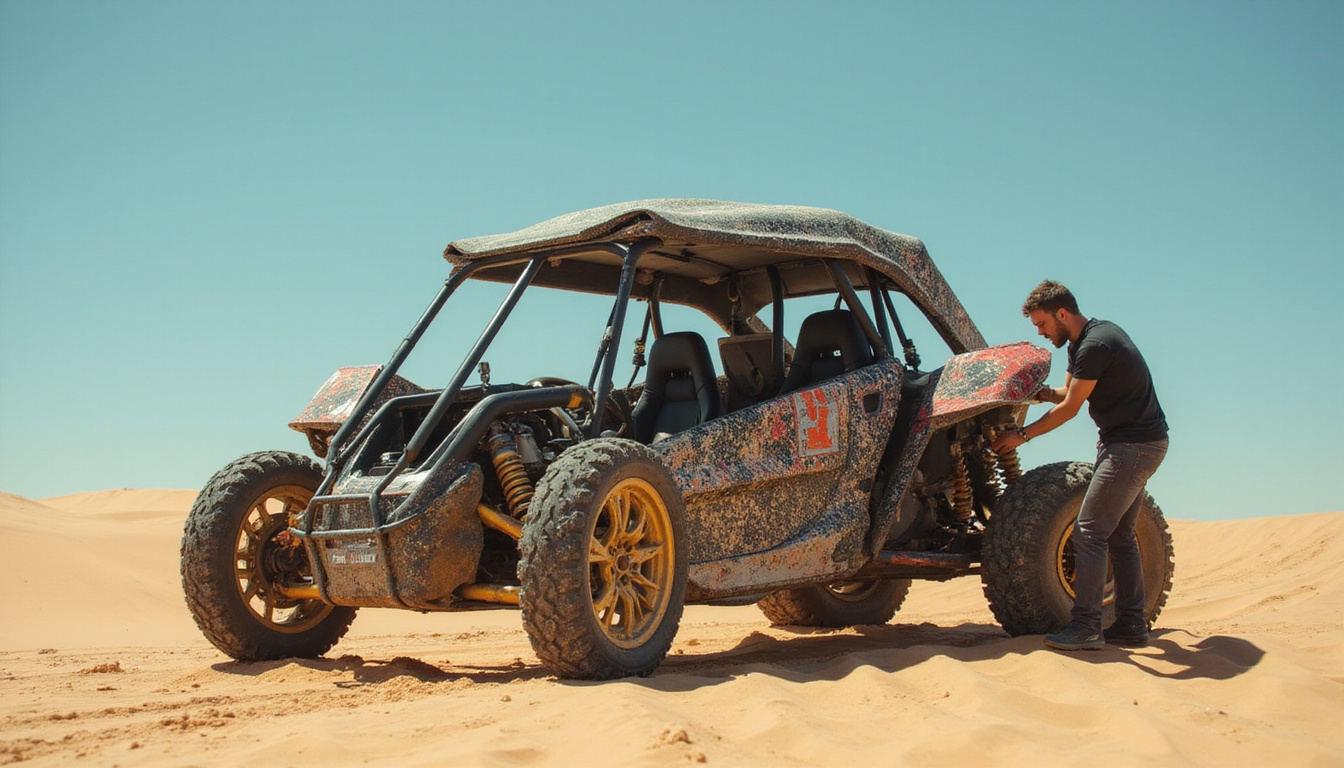
A common pre-race test plan has these steps:
-
Baseline Check
- Use a sound meter at the same spot and angle that officials use.
- Run the engine at the set rpm and note the high and average readings.
-
Step-by-Step Exhaust Changes
- Swap mufflers, add parts, change length, or re-route pipes.
- Retest after each change and record the decibel shift and any impact on power.
-
Real-World Trials
- Run tests on a dyno or in a safe off-road area under load.
- Log sound from more than one spot (side, rear, cabin) to get the full picture.
-
Safety Buffer
- Instead of testing right at the limit (for example, 100 dB), teams aim below that (around 96–98 dB) to allow for:
- Meter differences
- Weather and temperature shifts
- Sound bouncing on surfaces
- Instead of testing right at the limit (for example, 100 dB), teams aim below that (around 96–98 dB) to allow for:
-
Keeping Records
- Note all settings, parts, and test results so the setup can match after fixes.
With sound treated as a key test measure, teams turn side testing into a clear engineering task.
The Community and Environment Side of Noise Control
Today, Baja events meet with many groups: landowners, local rules groups, nature groups, and residents. Noise lies at the heart of these talks.
Keeping the Desert Sound Clear
Too much engine noise can:
- Stress animals during sensitive times.
- Change how animals talk, hunt, or gather food.
- Force animals out of key areas during the race.
Noise tests and route planning cut down loud parts near fragile spots.
Respecting Neighbors and Landowners
The race track goes near small towns, communal lands, and private ranches. Agreements with locals often include:
- A route that skips dense living areas.
- Quiet times for some support work.
- Firm sound limits for both race vehicles and support trucks.
When teams treat noise testing with care, they protect not just their own race but future events as well.
Common Noise Issues and How Teams Fix Them
Even a well-prepared vehicle can run into noise issues. Here are common problems and fixes:
-
Exhaust leaks
- Issue: Faulty gaskets or cracked welds raise noise.
- Fix: Use stronger flanges and joints, check regularly.
-
Muffler packing failure
- Issue: Heat and bumping can break the packing and raise dB during the race.
- Fix: Use high-temperature materials, repack as needed, or pick a metal-based design.
-
Damage from ground hits
- Issue: Rocks or hard bumps can bend pipes and change the sound.
- Fix: Improve routing, add skid guards, and use strong hangers.
-
Last-minute tuning changes
- Issue: A quick tune-up near race week can make the sound jump above limits.
- Fix: Run noise tests again after any major tune or part swap.
Good teams treat sound like tire wear or fuel use—a factor to watch all race long.
FAQ: Baja 1000 Noise Testing and Related Questions
-
How is Baja 1000 noise testing measured on race vehicles?
A sound meter is set at a fixed spot and angle to the exhaust. The engine runs at a set rpm. The meter records dB(A) and compares that to the limit defined by race rules. -
What are typical exhaust noise limits for trucks and UTVs?
Many groups allow between 96 and 100 dB(A) for race trucks. Some groups for UTVs or motorcycles may have a lower cap. Teams use pre‑race noise tests to hit their target with a safety gap. -
Do noise rules apply only to race cars or also to support vehicles?
The strict meter-based test is for race vehicles. However, race organizers now watch the sound of support and chase vehicles too. Many teams work on a quieter setup for all their vehicles.
Taming the Roar Without Killing the Thrill
The loud sound of the Baja 1000 is a large part of its charm—the roar of big trucks, the crack of bike engines, and echoes off rocky canyons. Still, high noise levels can hurt the race’s future, local goodwill, and the land.
By folding noise testing into design, engine tuning, and race-day checks, teams show that they can keep the desert’s wild feel while respecting the people and land around them. If you build a vehicle, plan to join the race, or support a team, think of noise as seriously as horsepower.
Set up your own sound tests, tune your exhaust right, and teach your crew about noise rules and best work practices. The better you prepare, the smoother tech checks run—and the more we all get to enjoy the Baja 1000 for years to come.
