A good crew tent can change your camping trip. It keeps your group dry, comfy, and organized. This guide shows you how to choose one, pack it, set it up, use it, and care for it. Follow these steps to camp like a pro.
What Is a Crew Tent—and When Do You Need One?
A crew tent is a big shelter for many people. It serves as:
• A place to sleep
• A spot to meet and eat
• A hub for planning events, trips, or film shoots
You need a crew tent when:
• Your group has 4–12 people who share space
• You want a common area for talks, first aid, or meal prep
• You store gear like stoves, tables, or bags under one roof
• You face wind, rain, or sun
In Scouts, expeditions, rescue, or event camps, a crew tent can be your home base.
Choosing the Right Crew Tent for Your Group
Before you buy, think of where and how you camp. The wrong tent may weigh too much, be hard to pitch, or feel uncomfy in bad weather.
1. Capacity and Interior Layout
Many tents say they hold 10 people but sleep only 8 with gear. Check:
• The headcount: Count your people and add 1–2 extra spaces.
• Gear space: Will you store packs or other items inside?
• Height: At least 6 ft (183 cm) helps when getting dressed.
• Layout: Some crew tents come with:
– Two or more rooms
– Extra doors for different groups
– Areas for wet boots or gear
2. Season Rating and Weather Resistance
Match your tent to the weather you face most.
• 3-season tents work in spring, summer, and fall. They are light and let air in.
• 3+/4-season tents have strong poles for wind and heavy storms.
• Full 4-season tents stand against snow, wind, and harsh winter.
Look for:
• A rainfly that reaches near the ground
• Sealed seams and a bathtub-style floor
• Strong poles in aluminum or a top-grade composite
• Extra loops for tying the tent in strong wind
Independent tests (e.g., from known review groups) can help when you pick one.
3. Weight and Packed Size
Crew tents are bulky but you want ease of use.
• For car camping, a heavier canvas or big poly tent works well.
• If you walk a short distance, choose a wheeled bag or share the load.
• For backpacking, pick a system that splits poles, fly, and body among people.
Find a mix of strength and easy transport. A heavy canvas is not useful if no one can move it.
4. Materials and Durability
Pay attention to these parts:
• Fabric choices:
– Polyester/nylon: Light and quick to dry, common today.
– Canvas/cotton: Hard-wearing and air-flow friendly, but heavy.
• Poles:
– Aluminum: Strong and repairable, good for frequent use.
– Fiberglass: Cheaper but heavy and can splinter.
• Floor: A thicker fabric lasts longer. A separate footprint protects it.
Essential Gear to Pack With Your Crew Tent
Gear goes with the tent. Pack a kit so you do not miss a thing.
Pack these:
• Tent body, fly, poles, stakes, and guylines (check each part before heading out)
• A mallet or stake hammer
• Extra stakes for rocky or sandy ground
• A footprint or tarp that is a bit smaller than the floor
• A repair kit with:
– A pole repair sleeve
– Duct tape or similar tape
– Seam sealer for your fabric type
• Organizers such as:
– A hanging loft or mesh pockets
– Small bins or bags for group gear
• Lights:
– LED lanterns
– String lights for common areas
• A doormat or boot tray to stop mud
Store all items with the tent in a labeled bag. This helps keep your camp gear ready.
How to Pack and Transport a Crew Tent Efficiently
Large tents can be hard to move. A good plan makes transport easy.
• Split the load:
– One person takes the poles.
– One takes the fly.
– One takes the tent body.
– One takes stakes and the repair kit.
Label each bag. This speeds up setup.
• Roll the tent instead of stuffing it:
1. Fold it into a narrow rectangle.
2. Roll it tightly around the poles (if weight is not a worry).
3. Use straps or belts to keep the roll firm.
• Keep the tent dry:
– On the trail: Pack it damp only for short times and dry it soon.
– Between trips: Dry it completely to avoid mold and damage.
Step-by-Step: Setting Up a Crew Tent Like a Pro
A clear plan makes pitching your tent fast. Practice at home or in a park before your trip.
1. Choose a Good Campsite
Find a flat, dry spot free of hazards. Look for these:
• Flat ground that drains well
• Areas free from low branches or risk of flooding
• Enough space for doors and walkways
Also, choose a side that keeps doors away from strong wind.
2. Lay Out and Orient the Tent
Place a footprint or groundsheet on the ground.
Lay the tent body on top and align the doors with your planned space.
Set vents or windows to face a mild breeze.
3. Assemble the Poles
Sort the poles by length and color (if marked).
Check each pole for damage.
Lay them on top of the tent in their spots.
4. Raise the Tent With Teamwork
Most crew tents pitch best with 2–4 people.
- Insert each pole into its sleeve or clip.
- Have two people lift opposite corners with the first pole.
- Attach the tent body to the pole.
- Repeat with other poles until the tent stands firm and even.
Work around the tent and adjust to keep the frame straight.
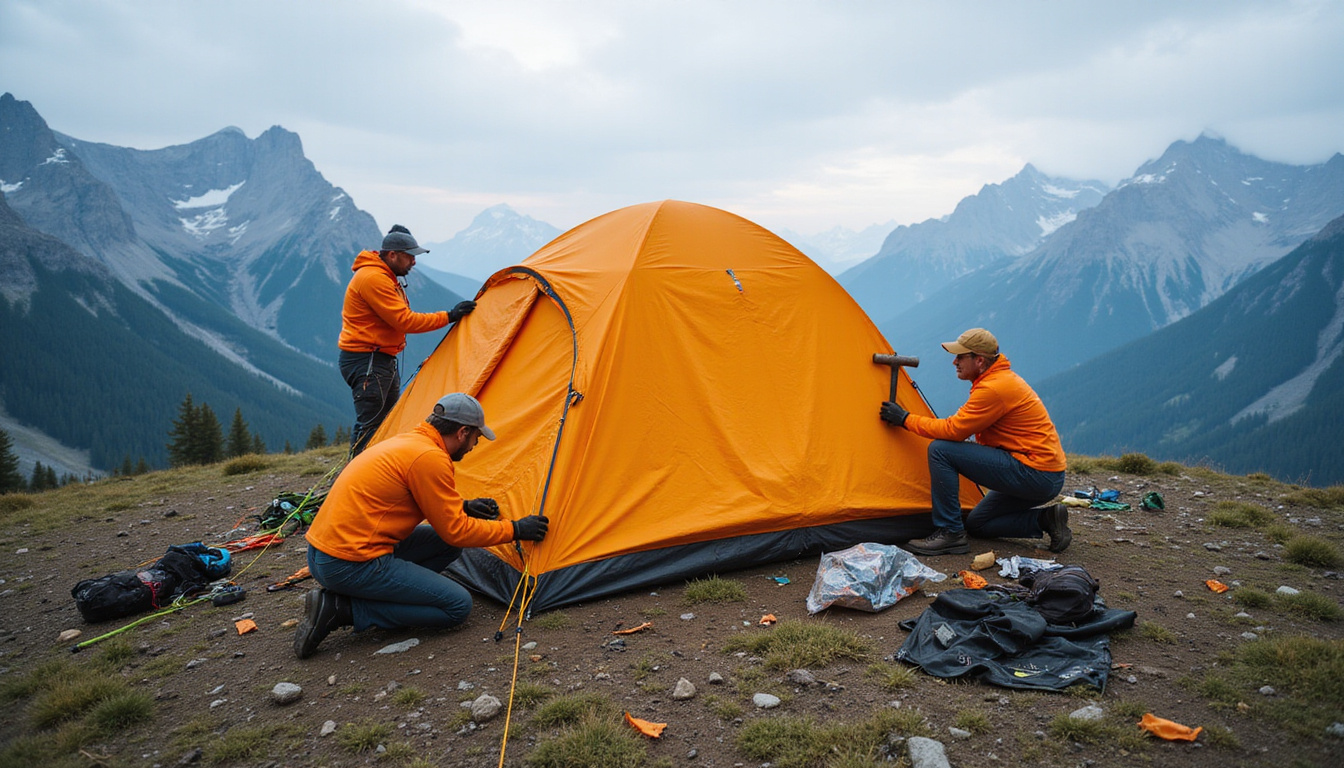
5. Stake and Guy Out Correctly
- Start with the tent’s corners. Pull each one to make the floor tight.
- Drive stakes into the ground at a 45° angle away from the tent.
- Tie the guylines at key points, such as:
– Where poles meet
– On the side that faces the wind
– At extra areas like vestibules
This process helps the tent resist wind and water.
6. Set the Rainfly
- Drape the rainfly over the frame and match the labels to the doors.
- Clip or hook it to the poles as instructed.
- Adjust straps or buckles so that the rainfly is tight but not too stressed.
- Keep a small space between the fly and the tent body to let air flow.
- Open small vents or windows to reduce condensation.
Smart Interior Setup for Comfort and Order
A tidy interior keeps the group happy and calm.
Create Zones
Divide the tent into areas:
• Sleeping area: Place beds so people can move easily.
• Gear area: Keep boots and packs near the door.
• Common area: If possible, leave a space for sitting or talks.
• First aid or valuables: Mark a spot for these items.
Use Vertical Space
• Hang a loft for lamps, glasses, or phones.
• Use mesh pockets for small items like a knife or sunscreen.
• Suspend a lantern in the center and string lights along the top.
Set Ground Rules
Agree on a few rules:
• No cooking or fire inside the tent (fire and gas risks).
• Remove boots near the door.
• Follow quiet hours if many people share the space.
• Set a plan for wet gear; a tarp shelter may work best.
Crew Tent Maintenance, Cleaning, and Storage
Taking care of your tent keeps it working well for longer.
After Each Trip
• Shake off dirt and leaves.
• Wipe mud with a damp cloth.
• Check for small tears, loose seams, or bent poles.
• Dry the tent completely before storing it for long.
Periodic Deep Care
Every season or after heavy use:
• Wash gently by hand with lukewarm water and a mild soap meant for tents.
• Rinse and hang it to dry.
• Reapply a water repellent to the rainfly if water no longer beads off.
• Reseal seams when needed with the right products.
Storage Tips
• Store your tent loosely in a bag that breathes.
• Keep it in a cool, dry place away from the sun and extreme heat.
• Avoid attics or damp basements.
Quick Checklist: Crew Tent Best Practices
Use this list before and during each trip:
- Check your tent at home and confirm every part is there.
- Pack extra stakes, guylines, and a repair kit.
- Pick a flat, safe spot; set up doors and vents wisely.
- Stake and tie every part, especially in wind or rain.
- Organize the inside by zones.
- Enforce a no-cooking rule inside and watch for wet gear.
- Dry the tent completely before long storage.
FAQ: Crew Tent Use and Care
Q1: What size crew tent should I get for 8 people?
A: Look for a tent that lists 10–12 spaces. This gives room for 8 people and gear. The numbers on the tag may be tight.
Q2: How do I keep a large crew tent from feeling stuffy?
A: Let air in. Open roof vents or doors under the rainfly. Do not block vents with gear. Avoid drying wet gear inside.
Q3: Can I use one crew tent for both warm and cool weather?
A: A strong 3+ season or light 4-season tent may work in both. Use proper bags and pads for the weather. For heavy snow or cold, choose a true 4-season tent with strong poles.
A well-chosen and cared-for crew tent stands at the heart of your camp. It gives you a dry spot, a meeting place, and a command center for the trip. Pick a model that fits your group, pack it right, practice your pitch, and tend to it after each adventure.
Happy camping!
