Regular tire rotation keeps your car safe and helps it run well. Many drivers miss tire rotation or feel lost on how and when to do it. Rotating your tires helps them wear evenly, saves fuel, and keeps you in control on the road.
Below, you will find simple tips that clear up tire rotation and help you build a lasting maintenance habit.
What Is Tire Rotation and Why Does It Matter?
Tire rotation means you change each tire’s spot on the car. You might move the front tires to the back and the back tires to the front—or swap sides when needed. Tires wear in different ways.
• The front tires wear faster because they steer and brake.
• In front-wheel-drive cars, the front tires also take most of the engine’s power.
• When a car hauls heavy loads or tows, the back tires may wear faster.
Rotating your tires will:
• Balance the wear on all tires
• Help the tire set last longer
• Keep grip and braking even
• Lower the risk of sudden tire failure and odd handling
• Save money by delaying replacements
The National Highway Traffic Safety Administration says worn or poorly cared-for tires can raise crash risk and use extra fuel.
How Often Should You Rotate Your Tires?
The best time for tire rotation depends on your car and how you drive. Many drivers rotate tires every 5,000 to 8,000 miles. This schedule often goes with an oil change.
To pick the right time, you can:
• Read your owner’s manual
• Ask a trusted mechanic
• Choose a shorter interval if you drive hard, haul heavy loads, or drive in very cold or hot weather, or on rough roads
If your tires wear unevenly, show feathered treads, or cause your steering wheel to shake, get them rotated early.
Common Tire Rotation Patterns (And When to Use Them)
Pick a tire rotation pattern based on three things:
- If your car is front-, rear-, or all-wheel drive
- If your tires work one way only or can work any way
- If your tires are the same size or not
1. Patterns for Non-Directional, Same-Size Tires
For cars with four matching tires:
• Front-Wheel Drive (FWD)
– Move front tires straight to the back (same side)
– Move back tires to the front and swap sides
• Rear-Wheel Drive (RWD) and All-Wheel Drive (AWD)
– Move back tires straight to the front (same side)
– Move front tires to the back and swap sides
This swap helps even out wear.
2. Directional Tires
Directional tires work one way. For these:
• Move the front left tire with the rear left tire
• Move the front right tire with the rear right tire
• Do not swap sides, as that changes their direction
3. Staggered Fitment (Different Sizes Front and Back)
For some cars, the front and rear tires differ. In this case:
• Swap tires only from left to right on the same axle
• Do not move tires from front to back
If you feel unsure about your pattern, ask a professional or read your manual. Using an incorrect pattern can lead to poor grip and faster wear.
How to Tell If Your Tires Need Rotation
Even if you watch your miles, you can look for signs that you need a tire rotation:
• Tread Depth – Use a gauge or a coin. If one tire wears faster, it is time for a rotation.
• Cupping – Wavy edges on the tread show uneven wear.
• Feathered Tread – Tread blocks may feel smooth in one direction and sharp in the other.
• Pulling – The car may drift toward one side.
• Noise and Vibration – A hum or shake can come from uneven tire wear.
Check these signs early. Sometimes a rotation and a wheel alignment can bring back smooth driving.
DIY Tire Rotation vs. Professional Service
You can rotate your tires if you have the right tools and a bit of mechanical skill. You might need:
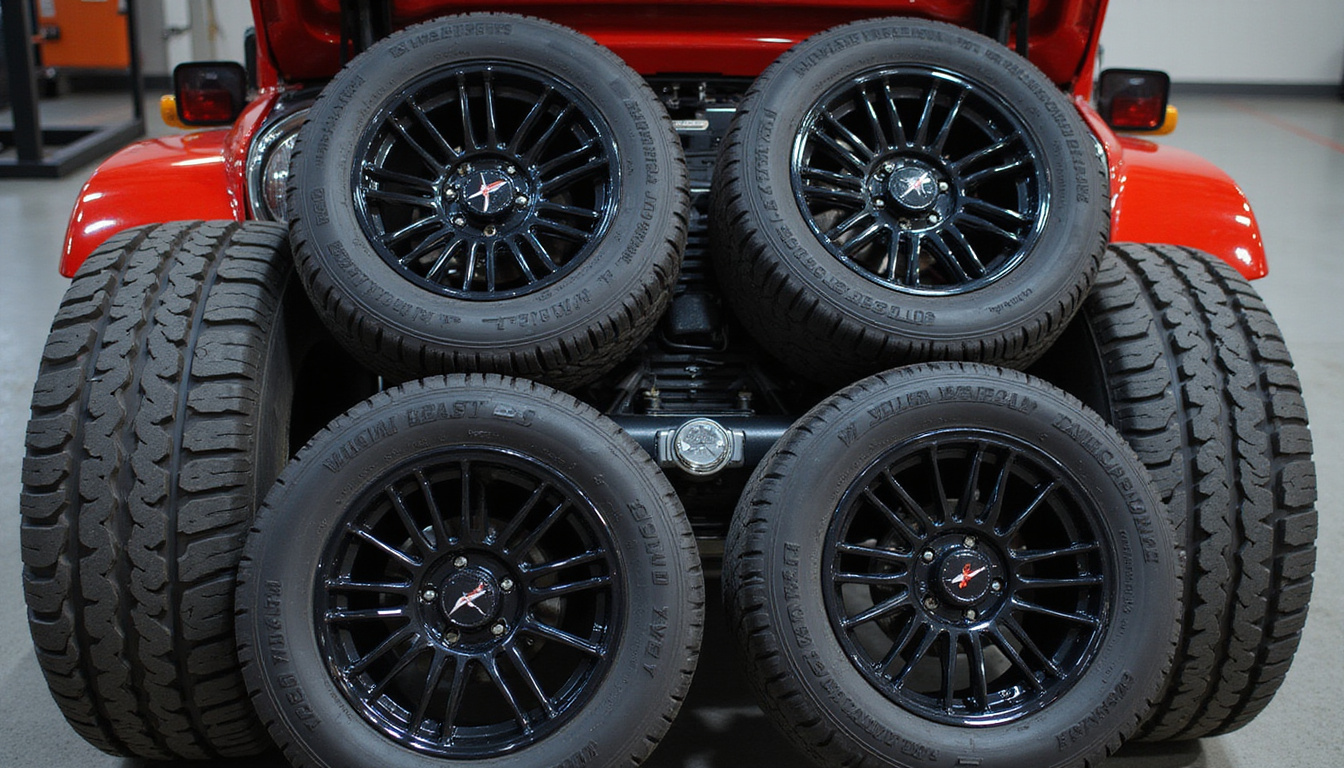
• A strong jack
• Jack stands
• A torque wrench
• Safety knowledge
DIY Tire Rotation: Quick Guide
- Park on flat ground and set the parking brake.
- Loosen your lug nuts a bit while the car is on the ground.
- Raise the car and place jack stands under proper points.
- Remove the wheels and mark their original locations (for example, FL, FR, RL, RR).
- Move each tire to its new spot according to the pattern.
- Hand-tighten the lug nuts.
- Lower the vehicle carefully.
- Tighten the lug nuts using the torque wrench.
If this feels too hard, a professional shop can do the job. Many shops even include tire rotation with other services.
Perks of a Professional Service
• They have proper lift tools and follow safety steps.
• They use the correct tightness on lug nuts.
• They look for tire damage and sidewall issues.
• They also check the alignment, balance, and suspension.
Integrating Tire Rotation Into a Maintenance Routine
Add tire rotation to your regular service routine. Here is a simple plan:
- Read your manual for the rotation schedule.
- Match the rotation with oil changes if the miles are similar.
- Keep a record of each rotation with the mileage, date, and pattern used.
- Check your tires once a month for wear and damage.
- Verify tire pressure monthly and before long trips.
Keep tires pumped right and aligned. This care improves performance and tire life.
How Tire Rotation Improves Safety and Fuel Economy
Tire rotation helps your car in many ways.
Safer Braking and Handling
Even tire wear means:
• Grip stays even on all corners
• Lower chance of water slip in rain
• Better stop power
• Steady handling in turns and on highways
If one set wears out faster, you might risk oversteering or understeering.
Better Fuel Economy
Uneven tire wear can:
• Raise rolling resistance
• Force your engine to work harder
• Lower fuel efficiency
Keeping your tires even helps your car work more efficiently and saves fuel.
Common Tire Rotation Mistakes to Avoid
When you work on your tires, be careful of these errors:
• Not following the manual’s schedule or pattern
• Rotating directional tires incorrectly by swapping sides
• Forgetting the correct pattern on AWD vehicles
• Ignoring wheel alignment while rotating tires
• Not tightening or over-tightening lug nuts
If you are unsure, ask a trusted technician.
Simple Checklist: Your Tire Rotation Routine
Use this list to guide you in tire care:
[ ] Read the owner’s manual for the right schedule and pattern
[ ] Rotate tires every 5,000–8,000 miles
[ ] Check tread and sidewalls every month
[ ] Set tire pressure once a month
[ ] Align tire rotation with oil changes when possible
[ ] Have alignment checked if you see uneven wear or pulling
[ ] Record each tire rotation and service
FAQ: Tire Rotation Questions Answered
-
How often should I get a tire rotation for my car?
Many cars need a rotation every 5,000–8,000 miles. Check your manual. If you drive hard or on rough roads, you might need it more often. -
Is tire rotation needed if my tires look good?
Yes. Tires often wear differently, even when they seem fine. Regular rotation can stop early wear and keep your car steady. -
Can I rotate tires myself, or should I go to a shop?
You can do it if you have the proper tools and know how. Many drivers choose a shop so an expert can also check the tread, alignment, and balance.
Regular tire rotation is one of the best ways to guard both your tires and your safety. Instead of waiting for uneven wear or odd handling, make tire care a routine step now.
If you are due for a tire rotation or are not sure when it was done last, set up an appointment with a trusted mechanic or tire shop. A quick and affordable visit can help your tires last longer, boost your car’s mileage, and give you more confidence each time you drive.
